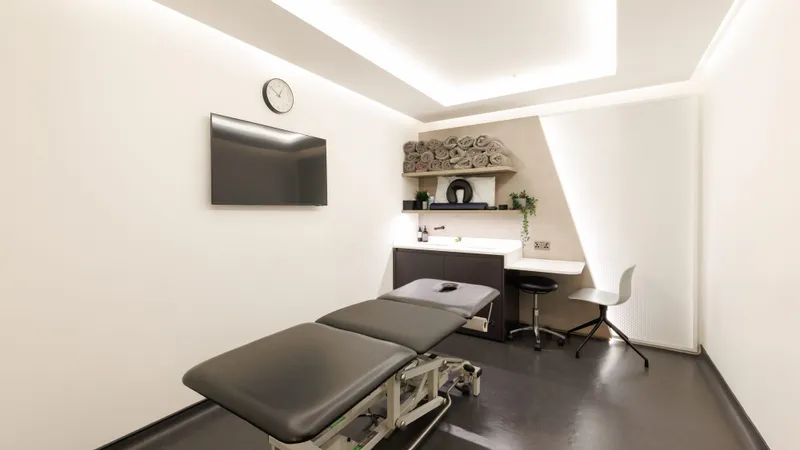
Assess
A detailed history and a thorough examination of movement, strength and the affected area. You leave knowing what is wrong, why it happened and exactly what we are going to do about it.
Pilates-based rehabilitation combining controlled movement, strength, mobility and body awareness: a low-impact, graded way to bridge the gap between finishing your rehabilitation and returning to full activity, tailored to your ability rather than to a class timetable.


Your first visit is a full 60-minute assessment: a detailed history, then testing of how you move, how strong you are and what the painful area is actually doing. We explain the working diagnosis in plain English and agree a plan with you before any treatment starts.
You leave with a written summary and a home programme, emailed the same day and loaded into the Move Health app so the technique stays right between visits.
Sessions focus on core strength, posture, flexibility, balance and movement control through exercises matched to your ability. The emphasis is on control rather than effort, which is what makes it work for people still building confidence.
For people whose back or neck flares periodically, consistent low-impact conditioning is one of the more reliable ways to reduce how often it happens. Exercise is recommended by NICE as core management for persistent low back pain.
The point where formal rehabilitation ends is where a lot of people drift and lose what they gained. Clinical Pilates gives that period a structure, so the strength you worked for is maintained rather than quietly given back.
After an injury it is common to guard and avoid. Graded, supervised movement rebuilds trust in what your body can do, which is often as valuable as the physical strength itself.
Excellent
From 4 five-star Google reviews
Source: Google
I saw Amanda for a problem I've been having with a painful shoulder. She explained to me what the problem was, did a thorough treatment session and gave me some exercises to do to improve it. Very professional and friendly, I highly recommend her.
I first visited Amanda following a maisonneuve fracture. That day I walked 107 steps in a camboot with two crutches. I have visited weekly. Yesterday I walked 13,315 steps (no crutches, no boot). The transformation is truly amazing.
I booked with Michelle for my first appointment. When I stood up I said to her it feels like heaven as my continuous back pain had totally gone. I was totally pain free for 7 hours so bless you Michelle.
Excellent treatment of my lower back and related sciatica injuries from CrossFit. Definitely my go-to therapist when in dire need of pain relief.
You can refer yourself, with no GP letter needed, and book online in a couple of minutes at whichever clinic is easier to reach.
Most people arrive with something that hurts. What happens after that is the part most clinics leave to chance. We treat the problem, rebuild the capacity you lost, then keep you strong enough that it stays fixed.
A detailed history and a thorough examination of movement, strength and the affected area. You leave knowing what is wrong, why it happened and exactly what we are going to do about it.

Hands-on manual therapy chosen for your presentation, with Western medical acupuncture or soft-tissue work added where they help. Treatment is not the goal in itself: it opens the window to move and load properly.

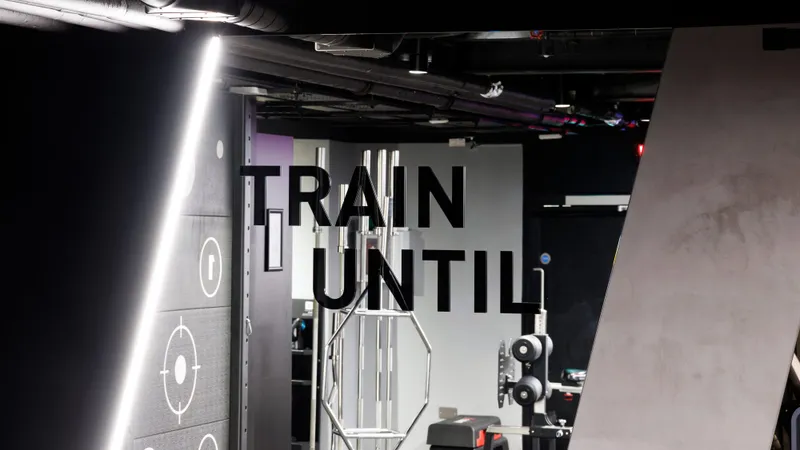
Progressive, coached exercise rehabilitation restores the strength and load tolerance you lost, with full gym facilities at both clinics. This is the stage that decides whether the fix lasts.

Each follow-up measures you against your own baseline. We discharge you when you have the strength and the tools to manage alone, with clinical Pilates, sports massage and golf screening on hand to keep you there.
The starting point for better health. Our clinics work together to take you from injury, through recovery and performance, to the kind of health that holds up for decades. One team, one plan, one record of where you started.


Written and medically reviewed byAmanda Yardley, Physiotherapist & Founder · MCSP AACP APPI · HCPC-registered · Health and Care Professions Council (HCPC) and Chartered Society of Physiotherapy (CSP).
FAQ
Clinical Pilates is tailored to your diagnosis and ability rather than delivered as a set sequence to a room. Because it sits within a physiotherapy practice, the exercises take account of your injury, your restrictions and your rehabilitation plan.
No, though many people come to it that way as a next step after finishing rehabilitation. If you are starting fresh with a specific problem, an initial physiotherapy assessment is usually worth doing first so the Pilates targets the right thing.
Often yes. Exercise is recommended by NICE as core management for persistent low back pain, and low-impact controlled movement suits people who are wary of loading. We assess first, because a small number of acute presentations need settling before starting.
Once a week is enough to build and maintain control for most people, particularly alongside a home programme. Consistency over several months matters far more than frequency, and it is the people who keep it going who see recurrences drop.
Get Started
Origin Health • 280 Bishopsgate, Liverpool Street, London EC2M 4RB
BookAppointments typically available within 1–2 weeks