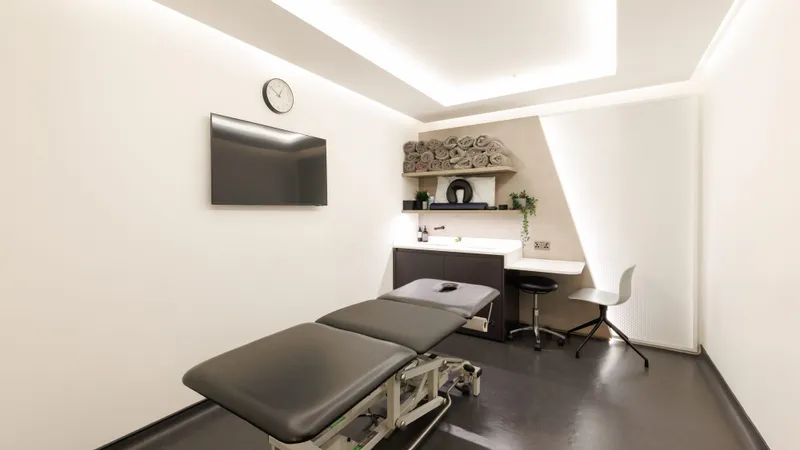
Assess
A detailed history and a thorough examination of movement, strength and the affected area. You leave knowing what is wrong, why it happened and exactly what we are going to do about it.
From runner’s knee and patellofemoral pain through to ACL reconstruction rehabilitation, knee problems almost always come back to load and capacity. Rebuilding the strength around the joint is what resolves them, and it is the stage most people cut short.

Overview
Knee pain covers several distinct presentations, and the assessment matters because they need different plans.
Patellofemoral pain, often called runner’s knee, produces pain around or behind the kneecap, typically worse on stairs, squatting or after prolonged sitting. It is usually a load-capacity problem rather than a structural one, and it responds well to progressive hip and quadriceps strengthening alongside sensible adjustments to training volume.
Ligament injuries, particularly of the anterior cruciate ligament, need a structured, long rehabilitation whether or not surgery is involved. Restoring strength and neuromuscular control to match the uninjured side is what determines the outcome, and objective measurement is genuinely valuable here.
Osteoarthritic knee pain is common from middle age onwards and responds to exercise as core treatment under NICE guidance. Assessment separates these, then treatment runs through physiotherapy and progressive rehabilitation, with VALD testing available where return-to-sport decisions are involved.
Excellent
From 4 five-star Google reviews
Source: Google
I saw Amanda for a problem I've been having with a painful shoulder. She explained to me what the problem was, did a thorough treatment session and gave me some exercises to do to improve it. Very professional and friendly, I highly recommend her.
I first visited Amanda following a maisonneuve fracture. That day I walked 107 steps in a camboot with two crutches. I have visited weekly. Yesterday I walked 13,315 steps (no crutches, no boot). The transformation is truly amazing.
I booked with Michelle for my first appointment. When I stood up I said to her it feels like heaven as my continuous back pain had totally gone. I was totally pain free for 7 hours so bless you Michelle.
Excellent treatment of my lower back and related sciatica injuries from CrossFit. Definitely my go-to therapist when in dire need of pain relief.
Patellofemoral pain, meniscal injury, ligament damage and osteoarthritis can all present as a sore knee. Assessment separates them, which matters because the plans differ substantially.
Complete rest usually makes things worse by lowering the capacity you need to rebuild. We adjust volume, surface and frequency so you keep running at a level the knee tolerates while strength comes back.
Most knee pain is a load-capacity problem. Progressive strengthening through the quadriceps, hip and glutes addresses the cause rather than the symptom, and it is the part that stops it coming back.
Returning before strength matches the uninjured side carries a real re-injury risk. Objective testing gives a measured answer to the readiness question instead of relying on how the last session felt.
Exercise is core treatment for knee osteoarthritis under NICE guidance, not an optional extra. A programme matched to your ability typically does more for symptoms and function than anything passive.
Why it happens
A rapid increase in running volume, intensity or hill work outpacing current capacity
Weakness through the quadriceps and gluteal muscles, altering how the kneecap tracks and loads
Ligament injury, most commonly to the anterior cruciate ligament, from a twisting or pivoting mechanism
Meniscal injury from a twisting load, or age-related meniscal change
Osteoarthritis of the knee joint, increasingly common from middle age
Prolonged sitting with the knee bent, a classic aggravator of patellofemoral pain

Your first visit is a full 60-minute assessment: a detailed history, then testing of how you move, how strong you are and what the painful area is actually doing. We explain the working diagnosis in plain English and agree a plan with you before any treatment starts.
You leave with a written summary and a home programme, emailed the same day and loaded into the Move Health app so the technique stays right between visits.
The starting point for better health. Our clinics work together to take you from injury, through recovery and performance, to the kind of health that holds up for decades. One team, one plan, one record of where you started.

You can refer yourself, with no GP letter needed, and book online in a couple of minutes at whichever clinic is easier to reach.
Most people arrive with something that hurts. What happens after that is the part most clinics leave to chance. We treat the problem, rebuild the capacity you lost, then keep you strong enough that it stays fixed.
A detailed history and a thorough examination of movement, strength and the affected area. You leave knowing what is wrong, why it happened and exactly what we are going to do about it.

Hands-on manual therapy chosen for your presentation, with Western medical acupuncture or soft-tissue work added where they help. Treatment is not the goal in itself: it opens the window to move and load properly.

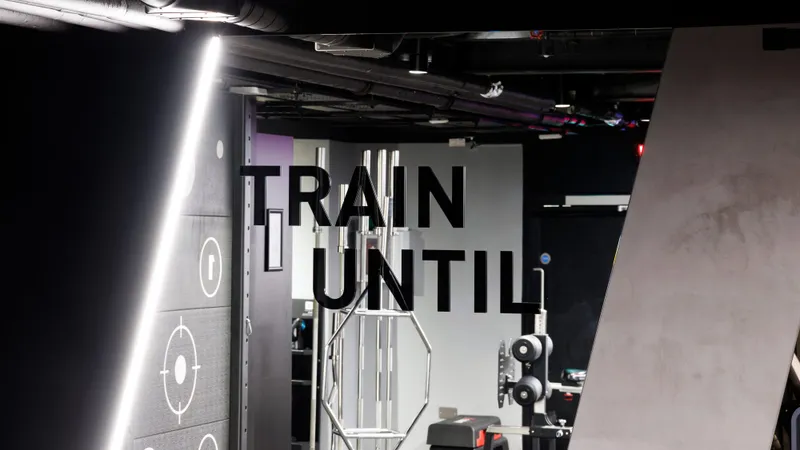
Progressive, coached exercise rehabilitation restores the strength and load tolerance you lost, with full gym facilities at both clinics. This is the stage that decides whether the fix lasts.

Each follow-up measures you against your own baseline. We discharge you when you have the strength and the tools to manage alone, with clinical Pilates, sports massage and golf screening on hand to keep you there.

Treatment approach
Assessment separates patellofemoral pain, ligament and meniscal injury, and osteoarthritis, which look similar to a patient but need very different management.
See treatment detail →Progressive strengthening of the quadriceps, hip and gluteal muscles is the core treatment across almost every knee presentation, and it is what determines whether the result lasts.
See treatment detail →Objective measurement of side-to-side strength difference is particularly valuable after ligament injury, where returning on feel alone carries a real re-injury risk.
See treatment detail →FAQ
Runner’s knee usually refers to patellofemoral pain: pain around or behind the kneecap, worse on stairs, squatting or after sitting for long periods. It is generally a load-capacity problem rather than structural damage, and it responds well to progressive strengthening.
Often yes, at a reduced volume. Complete rest tends to be counterproductive, because it lowers the capacity you need to rebuild. We usually adjust distance, surface and frequency rather than stopping altogether, then progress as strength improves.
Typically nine to twelve months before return to pivoting sport, whether or not you have surgery. Returning earlier than nine months is associated with a substantially higher re-injury rate, so we base progression on measured strength and function rather than on the calendar.
Often not. Patellofemoral pain and early osteoarthritis are diagnosed clinically, and scans frequently show meniscal or cartilage changes that are common in people without symptoms. We refer for imaging where there is a suspected ligament rupture, locking, or a failure to progress.
Get Started
Origin Health • 280 Bishopsgate, Liverpool Street, London EC2M 4RB
BookAppointments typically available within 1–2 weeks